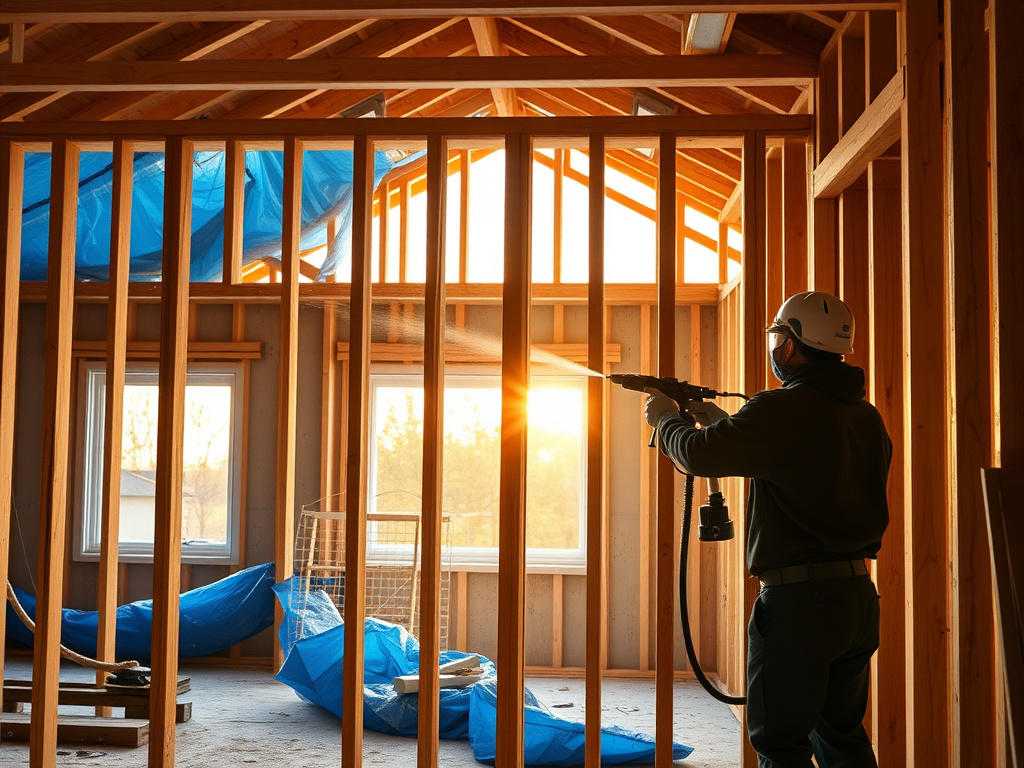
Does Spray Foam Insulation Increase Home Resale Value?
Energy Efficiency Is Increasingly Part of the Buying Decision
Home buyers have grown steadily more attentive to a house's energy performance, not just its square footage and finishes. Rising utility costs, more visible climate variability, and greater general awareness of building science all play a role. Real estate listings now routinely mention insulation type, HVAC age, and energy features as selling points, alongside kitchen renovations and updated bathrooms.
Spray foam insulation sits squarely inside this trend. Buyers who have owned a home with underinsulated walls or a leaky attic often specifically ask about insulation type during a showing or through their agent, and a documented spray foam upgrade can be a meaningful talking point during negotiations, particularly in climates with significant heating or cooling seasons.
That said, insulation upgrades generally are not a line-item value-add the way a renovated kitchen might be. Their impact on resale value tends to show up indirectly: through lower documented utility costs, a stronger home inspection outcome, and a general impression of a well-maintained, efficiently built home.
What Home Inspectors and Appraisers Actually Look At
Inspectors
A general home inspector will typically visually assess accessible insulation in the attic and, where visible, in the basement or crawlspace. They are checking for adequate thickness and fill, obvious gaps, signs of moisture or pest damage, and whether insulation appears professionally installed versus done piecemeal. Spray foam, when properly applied, tends to present well during this kind of visual inspection because it is a continuous, adhered layer rather than loose material that can shift or show gaps over time.
One nuance worth understanding: because foam is sprayed directly onto framing and roof decking, it does cover the wood surfaces that an inspector might otherwise want to visually check for issues like water staining or structural damage. This is not a defect in the foam itself, but it is a real consideration that comes up during inspections, covered in more detail below.
Appraisers
Appraisers are primarily focused on comparable sales, square footage, condition, and notable upgrades rather than performing a technical insulation assessment. Spray foam insulation is unlikely to move an appraisal number directly the way an added bedroom or bathroom would. Where it can matter is in the "condition" and "quality of construction" narrative sections of an appraisal, and in markets where energy-efficient features are increasingly factored into comparable selection and adjustment.
Documentation Homeowners Should Keep
Because spray foam is not something a buyer, inspector, or appraiser can easily quantify just by looking at it, documentation is one of the highest-leverage things a homeowner can maintain to support resale value. Keep records of:
- What was installed — open-cell or closed-cell, and in which specific areas of the home (attic, walls, rim joist, crawlspace)
- Approximate thickness and R-value achieved in each area, as provided by the contractor
- Where it was installed — ideally with basic photos taken during or immediately after the project, before drywall or finishes cover the area
- Who installed it — company name, and any manufacturer or installer certification if the contractor holds one
- Date of installation
- Any product literature or spec sheets provided by the contractor for the specific foam product used
This documentation serves two purposes at resale: it gives a buyer's agent or inspector something concrete to point to instead of guessing, and it gives the listing a factual detail to include rather than a vague "spray foam insulated" bullet point that carries less weight without support.
How Spray Foam Is Perceived Differently by Market and Climate
Perception of spray foam insulation varies meaningfully by region. In colder climates with long heating seasons, spray foam's air-sealing performance is often well understood by local buyers and agents, and it tends to be viewed as a straightforward positive, particularly in older homes being marketed as recently upgraded. In hot, humid climates, spray foam is frequently associated with attic and roofline conditioning strategies aimed at controlling both heat gain and humidity, and buyers familiar with those regional building practices tend to view it favorably as well.
In markets where spray foam is less commonly used, buyers and even some agents may simply be less familiar with it, which can mean the upgrade needs more explanation to land as a selling point rather than being automatically understood. This is another place where documentation helps: a one-page summary of what was done and why can bridge that familiarity gap during a showing or in listing materials.
Buyer and Inspector Concerns: Foam Covering Framing
The most common concern that comes up around spray foam at resale relates to inspection visibility. Because foam is adhered directly to roof decking, wall studs, and rim joists, it can obscure the wood surfaces underneath from a purely visual inspection. Some inspectors and cautious buyers raise this as a point of concern, since it means an inspector cannot visually check the covered wood for pre-existing rot, water staining, or pest damage the way they could with open studs or removable batt insulation.
This concern is real, but it is manageable, and proper documentation is the primary tool for addressing it. If the framing was inspected and confirmed sound before the foam was applied — which a competent contractor should be doing as a standard part of the job — a written or photographic record of that pre-installation condition addresses the inspector's concern directly. Homeowners who kept before-and-after photos from their original installation are typically able to resolve this question quickly during a sale, whereas homeowners with no documentation may face more back-and-forth or a request for additional inspection.
The Bottom Line for Sellers
Spray foam insulation is generally viewed as a positive, modern upgrade by buyers who understand it, and it tends to support a smoother inspection process and a stronger energy-efficiency narrative in a listing. It is not typically a dollar-for-dollar value add the way a kitchen remodel is, and its resale impact depends heavily on documentation, regional familiarity, and how well the upgrade is communicated to buyers and their agents. Homeowners planning to sell in the coming years get the most resale benefit by keeping thorough installation records from day one, rather than trying to reconstruct that information later when a buyer's inspector asks about it.
More From the Blog
How Much Does Spray Foam Insulation Really Cost in 2026?
Spray foam pricing varies wildly from quote to quote. Here is a full breakdown of what you should actually expect to pay in 2026, and why two bids for the same house can differ by thousands.
Closed-Cell Foam and Basement Moisture: What Homeowners Should Know
Closed-cell foam is a popular choice for basements because of its low permeability, but it is easy to misunderstand what it actually solves versus what it does not.
Ready to see what spray foam costs for your project?
Tell us about your space and get connected with a vetted local installer for a free, no-obligation quote.