Closed-Cell Foam and Basement Moisture: What Homeowners Should Know
Why Closed-Cell Foam Is a Common Basement Choice
Basements present a different challenge than attics or above-grade walls. They sit partly or fully below grade, in contact with soil that holds moisture year-round, and they are prone to humidity swings that other parts of the house rarely experience. Closed-cell spray foam has become a common choice for basement walls and rim joists largely because of its cell structure: the tightly packed, closed cells resist water vapor movement far more effectively than open-cell foam or traditional fibrous insulation.
This low permeability matters in a basement because it limits how much moisture can move through the insulation layer and reach cold surfaces where it could condense. Closed-cell foam also adds a meaningful amount of rigidity and structural stiffening to the stud bays or rim joist areas it is applied to, which is a secondary benefit some homeowners value in older foundations.
Vapor-Blocking Is Not the Same as Stopping Bulk Water
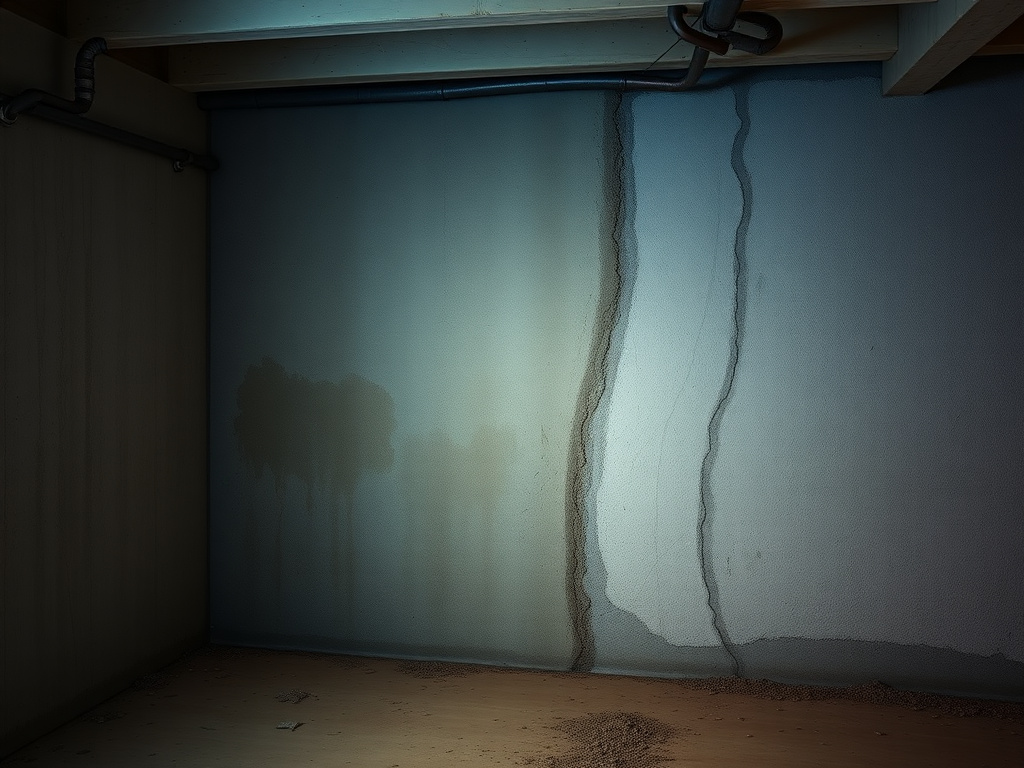
This is the single most important distinction to understand before insulating a basement, and it is one that gets confused constantly. Closed-cell foam is very good at slowing the movement of water vapor — the invisible moisture carried in humid air. It is not designed to be, and should not be relied on as, a solution for bulk water intrusion — actual liquid water entering through cracks, gaps, or hydrostatic pressure from outside.
If your basement has a history of water actively coming in — puddling after heavy rain, a damp line along the base of the wall, or a sump pump that runs constantly during wet seasons — that is a bulk water problem, and it needs to be solved at its source before insulation goes in, not covered up by it. Spraying foam over a wall that still has an active water intrusion path does not fix the underlying issue, and it can make the problem harder to diagnose later because the foam sits directly against the concrete, potentially trapping moisture against the wall in the area of the leak.
How Closed-Cell Foam Is Typically Applied in a Basement
In a basement retrofit, closed-cell foam is most commonly applied directly to the interior face of the foundation wall and up into the rim joist area where the foundation meets the wood framing above. Rim joists in particular are a frequent air-leakage and cold-spot location, since that band of framing sits right at the transition between conditioned and unconditioned space and is often poorly sealed with traditional insulation methods.
Application thickness in a basement context is usually driven by local code requirements and climate zone rather than a one-size-fits-all number, and many jurisdictions have specific rules around exposed foam in basements related to fire and ignition barriers. A qualified contractor should be able to explain what thickness and any required coating or barrier applies to your specific project before work begins.
What to Fix Before You Insulate
Because closed-cell foam adheres tightly and is difficult to remove without damaging the substrate underneath, it is worth resolving the following before any spray foam goes into a basement:
- Exterior drainage and grading — Confirm that the ground around your foundation slopes away from the house and that downspouts discharge water well away from the foundation walls, rather than pooling near them.
- Gutter function — Clogged or poorly routed gutters are one of the most common contributors to basement moisture problems, and they are also one of the cheapest to fix before insulating.
- Active leaks or cracks — Any visible crack or joint where water has entered in the past should be evaluated and sealed or otherwise addressed by a foundation or waterproofing specialist.
- Sump pump condition — If your basement relies on a sump pump, confirm it is functioning, has a working check valve, and ideally has a battery backup, since insulation will make it harder to visually monitor the wall behind it for future issues.
- Existing dampness or standing water — Insulating over a wall that is currently damp or wet traps that moisture rather than resolving it.
Signs a Basement Isn't Ready for Insulation Yet
A few warning signs suggest the basement needs additional work before a spray foam crew should proceed:
- Visible efflorescence (white, chalky mineral deposits) on the foundation wall, which indicates water has been moving through the concrete
- A musty odor that persists even in dry weather
- Peeling paint or a consistently damp feel to the concrete surface
- A history of water entry after moderate to heavy rain that has not been addressed
- A sump pump that runs frequently even outside of major storms
If any of these apply to your basement, it is worth bringing in a waterproofing contractor to assess and resolve the underlying moisture source first. Many spray foam contractors will flag these issues themselves during a walkthrough and recommend holding off until they are addressed, since applying foam over an active moisture problem does not serve the homeowner well long-term and can create disputes later about what the insulation was and was not responsible for.
The Right Order of Operations
The general sequence that tends to produce the best long-term outcome in a basement is: address exterior drainage and grading first, resolve any active water entry points, confirm the sump system (if present) is reliable, let the space dry out and stabilize, and only then move forward with closed-cell foam insulation on the walls and rim joist. Skipping ahead to insulation because it feels like the more visible improvement is one of the most common basement mistakes homeowners make, and it is one that closed-cell foam's own low permeability can inadvertently make harder to catch, precisely because the foam is so good at blocking vapor movement that a hidden bulk-water issue behind it may not show obvious surface symptoms right away.
Done in the right order, closed-cell foam can be a genuinely effective part of a dry, comfortable, energy-efficient basement. Done out of order, it risks becoming an expensive material sitting over an unresolved problem.
More From the Blog
How Much Does Spray Foam Insulation Really Cost in 2026?
Spray foam pricing varies wildly from quote to quote. Here is a full breakdown of what you should actually expect to pay in 2026, and why two bids for the same house can differ by thousands.

Does Spray Foam Insulation Increase Home Resale Value?
Energy efficiency upgrades increasingly influence how buyers evaluate a home. Here is how spray foam specifically factors into resale value, inspections, and appraisals.
Ready to see what spray foam costs for your project?
Tell us about your space and get connected with a vetted local installer for a free, no-obligation quote.