How Much Does Spray Foam Insulation Really Cost in 2026?
Why Spray Foam Quotes Vary So Much
If you have collected more than one quote for spray foam insulation, you have probably noticed the numbers do not line up. One contractor quotes $1,800 for an attic. Another quotes $4,200 for what sounds like the same job. That gap is not usually a scam — it is almost always a difference in scope, foam type, thickness, or what is included in the written estimate.
Spray foam is priced differently than batt or blown insulation because it is a two-part chemical product mixed and applied on-site by a trained crew, not a pre-manufactured material rolled out or blown into place. Labor, equipment, rig time, and material chemistry all factor into the final number in a way that fiberglass and cellulose simply do not experience to the same degree.
This guide walks through real-world pricing ranges for open-cell and closed-cell foam, how cost changes by project type, what specifically drives a quote up or down, two sample project breakdowns, and how to compare bids so you are actually comparing apples to apples.
Open-Cell vs. Closed-Cell: Cost Per Board Foot
Spray foam is typically priced by the board foot — one square foot of surface area sprayed at one inch of thickness. Understanding this unit is the single most useful thing you can do before requesting quotes, because it lets you normalize wildly different-looking bids.
- Open-cell foam typically runs $0.44 to $0.65 per board foot installed, depending on region and job size.
- Closed-cell foam typically runs $1.00 to $1.50 per board foot installed, reflecting its denser cell structure and higher-cost chemistry.
Because closed-cell foam has a higher R-value per inch (roughly R-6 to R-7 per inch versus roughly R-3.5 to R-3.8 per inch for open-cell), you often need less thickness to hit the same R-value target. That narrows the total price gap between the two products more than the per-board-foot numbers alone suggest, but closed-cell almost always remains the more expensive option per square foot of wall or ceiling area at equivalent R-value.
Translating Board Feet to Square Foot Pricing
For a rough sense of installed cost per square foot of surface area:
- Open-cell at 3.5 inches (roughly R-13) commonly lands around $1.55 to $2.30 per square foot.
- Closed-cell at 2 inches (roughly R-13) commonly lands around $2.00 to $3.00 per square foot.
- Closed-cell at 3 inches (roughly R-19-21) commonly lands around $3.00 to $4.50 per square foot.
These are installed-cost ranges that include material and labor, not material-only pricing. Actual numbers in your market can sit outside these ranges depending on the factors covered below.
Cost by Application Area
Total project cost depends heavily on where the foam is going, since access, surface prep, and typical thickness all change by location in the home.
Attic Insulation
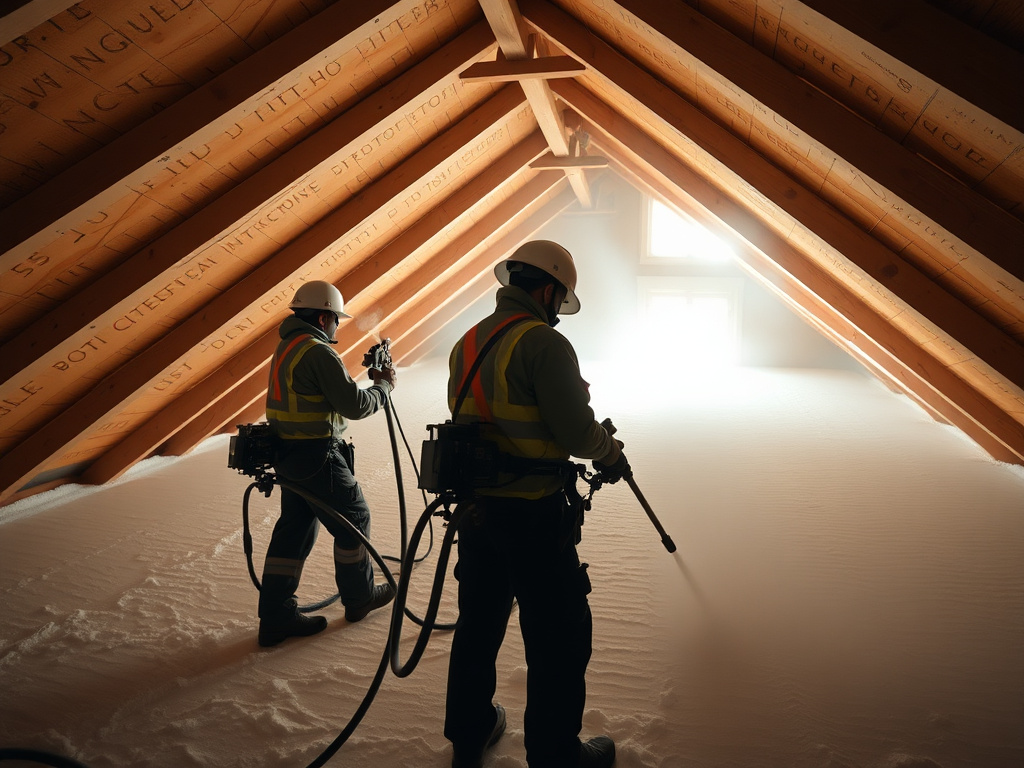
Attics are one of the most common spray foam applications and one of the more cost-effective per square foot, assuming reasonable roof access. A typical unfinished attic using open-cell foam at the roofline (creating a conditioned attic space) often falls in the $1.50 to $3.50 per square foot range depending on roof pitch, obstructions, and existing insulation that needs to be dealt with first.
Wall Cavities
New-construction wall cavities are generally the least expensive per square foot to spray because the studs are exposed and there is no demolition or protection work required. Retrofit wall applications — spraying into existing finished walls through drilled access holes — cost meaningfully more per square foot due to the extra labor and lower material yield.
Crawlspaces
Crawlspace encapsulation projects that include closed-cell foam on the walls and rim joists tend to run higher per square foot than attic work because of tight working conditions, moisture considerations, and often a vapor barrier or dehumidification component bundled into the same project. Whole-crawlspace projects commonly range from $2,500 to $8,000+ depending on square footage and whether encapsulation materials are included alongside the foam.
Whole-House New Construction
For new builds, spray foam applied to the full building envelope — walls, rooflines, and rim joists — is typically quoted as a lump sum tied to total conditioned square footage rather than a simple per-square-foot number, since crews are usually on-site for an extended period as part of the broader insulation package. Whole-house new-construction spray foam packages commonly land in the $4,000 to $18,000+ range for an average single-family home, varying enormously with house size, foam type, and target R-value.
What Drives Your Price Up or Down
Accessibility
A walk-up attic with 6 feet of headroom sprays faster and cheaper than a cramped, low-clearance attic where a crew has to work on their knees or in a confined crawlspace. Tight access slows down application and increases labor hours, which shows up directly in your quote.
Removal of Old Insulation
If your attic or crawlspace already has old fiberglass, cellulose, or damaged foam that needs to be removed before new foam goes in, expect an added line item. Removal and disposal of old insulation is priced separately by many contractors and can add anywhere from a few hundred dollars to well over a thousand depending on volume and whether contamination (rodent activity, mold) complicates disposal.
R-Value Target
Thicker application means more material and more labor time, so a job targeting R-38 in a roofline will cost more than one targeting R-21, even in the identical space. Confirm what R-value each quote is actually built around — this is one of the most common places bids diverge without homeowners realizing why.
Contractor Overhead and Business Model
Established companies with full-time crews, dedicated rigs and vehicles, showrooms, and marketing budgets generally price higher than smaller independent operators. That is not automatically a reason to choose the cheaper option — track record, proper equipment calibration, and crew training matter more than overhead level — but it is a real factor in why quotes differ.
Seasonal Demand
Spray foam contractors, like most trades, see demand spikes in spring and fall when homeowners are most focused on energy performance ahead of extreme temperature seasons. Booking work in the off-season (deep winter or mid-summer in most climates) can sometimes yield more competitive pricing simply because crews have more open calendar space.
Job Minimums
Many spray foam companies carry a minimum job charge — often somewhere between $1,200 and $2,500 — to cover rig mobilization, setup, and cleanup regardless of square footage. A small job, like insulating a single rim joist run, may cost more per square foot than a large job simply because of this minimum.
Sample Project Cost Breakdowns
Example: 1,500 Square Foot Attic, Open-Cell at Roofline
A 1,500 square foot attic sprayed with open-cell foam at 5.5 inches along the roofline (to bring the attic into the conditioned envelope) might break down roughly as follows:
- Material and labor at approximately $2.00 per square foot: $3,000
- Removal of existing blown insulation on the attic floor (if not left in place): $400 to $900
- Baffles/venting adjustments or fire-retardant coating if required by local code: $300 to $800
- Estimated total: $3,700 to $4,700
Example: 1,000 Square Foot Crawlspace Encapsulation
A 1,000 square foot crawlspace getting closed-cell foam on the perimeter walls and rim joist, paired with a vapor barrier on the ground, might break down roughly as follows:
- Closed-cell foam on walls and rim joist at 2 inches: $2,800 to $3,600
- Ground vapor barrier material and installation: $800 to $1,800
- Sump pump or drainage tie-in if needed: $600 to $1,500 (optional, situational)
- Estimated total: $4,200 to $6,900, with the wide range driven almost entirely by whether drainage work is included.
These figures are illustrative ranges based on industry-typical pricing patterns, not quotes for a specific home. Always get a written, itemized estimate for your actual project.
Financing and Payback Period: Thinking About ROI
Spray foam almost always costs more upfront than fiberglass batts or blown cellulose at the same R-value. The financial case for choosing it typically rests on two things: the air-sealing performance that reduces heating and cooling energy use, and the durability that means it does not sag, settle, or need replacement on the same timeline as other materials.
A rough way to think about payback period: take your estimated annual energy savings (many homeowners in properly air-sealed attics report meaningful reductions in heating and cooling costs, though the exact percentage depends heavily on your climate, existing insulation, home leakiness, and utility rates) and divide it into the incremental cost of foam versus a cheaper alternative. Many homeowners land somewhere in a multi-year payback window, after which the energy savings are effectively pure upside for the remaining life of the foam, which is generally decades when installed correctly.
Financing options worth asking your contractor about include:
- In-house payment plans offered directly by the insulation company
- Third-party home-improvement financing products
- Utility company rebate programs for air sealing and insulation upgrades
- Manufacturer promotions tied to specific foam product lines
Ask your contractor directly what rebates or financing programs are currently available in your area — these change frequently and are one of the more overlooked ways to lower effective project cost.
How to Get Accurate, Apples-to-Apples Quotes
The single biggest reason homeowners feel blindsided by spray foam pricing is that they compare quotes that are not actually describing the same job. Before you request bids, and again before you compare them, confirm each contractor is quoting:
- The same foam type (open-cell vs. closed-cell) for the same areas
- The same target thickness or R-value, not just "we'll insulate the attic"
- Whether removal and disposal of existing insulation is included
- Whether any air sealing, baffle installation, or fire-retardant coating is included
- Whether the quote covers the whole area you want treated, or only part of it
Ask every contractor for a written scope of work, not just a total dollar figure. A one-line quote with no detail is one of the hardest documents to compare against anything else.
Common Cost-Related Red Flags and Mistakes
Vague or Verbal-Only Quotes
If a contractor will not put thickness, foam type, and treated area in writing, that is a problem regardless of how competitive the number sounds. Verbal quotes leave too much room for scope disagreements once work is underway.
Price That Seems Far Below Market
An unusually low bid relative to everyone else you have talked to often means thinner-than-needed application, a lower-grade foam product, or a crew cutting corners on mix ratio and equipment calibration. Foam that is not mixed correctly can underperform on R-value and off-gas longer than it should.
No Mention of Ventilation or Code Requirements
Certain attic and roofline applications have code-driven requirements around ventilation baffles or ignition/thermal barriers. A quote that ignores these details may be missing real cost that shows up later as a change order — or worse, may result in work that fails inspection.
Pressure to Sign Same-Day
Spray foam is a significant home investment. A legitimate contractor should be comfortable with you taking a quote home, comparing it to others, and asking questions before committing.
How Regional Factors Change Your Price
Spray foam pricing is not national — it is local, and the same job can cost noticeably different amounts depending on where you live. A few of the biggest regional drivers:
- Labor market rates. Skilled trade labor costs more in metro areas with a higher cost of living, and spray foam crews are no exception. The same attic job can run 20 to 40 percent higher in a major metro than in a rural market with lower overhead.
- Fuel and material shipping. Foam chemicals are shipped in drums from a limited number of manufacturing and distribution points, so contractors farther from those hubs sometimes pass along higher freight costs.
- Climate-driven R-value targets. Colder climates typically call for thicker application to hit higher recommended R-value targets, which increases material cost even before labor is factored in. A roofline job in a northern climate zone may need more board feet of foam than the same square footage in a mild coastal climate.
- Local code requirements. Some jurisdictions require specific ignition or thermal barrier coatings over exposed spray foam in living spaces, or mandate particular ventilation details in attic applications. Code-driven add-ons vary by city and county and can shift a quote by several hundred dollars.
- Competitive density. Markets with several established spray foam contractors competing for the same customers tend to see more competitive pricing than markets served by only one or two crews.
Because of this variation, national average figures are only a starting point. The ranges in this guide are a reasonable planning baseline, but your actual quotes are the only numbers that reflect your specific market.
Maintenance and Long-Term Cost Considerations
Spray foam is often marketed as a "install once, done forever" product, and for the most part that holds true when the job is done correctly. Unlike fiberglass batts, which can sag, settle, or get disturbed by pests over the years, properly cured spray foam does not need to be topped off, re-fluffed, or replaced on any kind of routine schedule. That said, a few long-term cost factors are worth planning around.
Roof leaks or plumbing leaks that occur years after installation can be harder to spot visually once spray foam is in place, since the foam adheres directly to the roof deck or wall sheathing rather than sitting loosely on top of it the way blown insulation does. Some homeowners budget for periodic attic inspections, particularly after major storms, specifically because a hidden leak sitting against foam for months can eventually cause wood rot that is more expensive to repair than the original insulation job.
If a remodel or addition requires opening up a wall or roofline that has already been sprayed, expect an added cost for that section compared to a home insulated with removable batts, since cured spray foam has to be cut away and cannot simply be pulled out and reused. This is a reasonable tradeoff for most homeowners given the performance benefits, but it is worth knowing about before a future renovation catches you off guard.
On the positive side of the long-term ledger, spray foam's air-sealing performance tends to hold up for the life of the material far better than the effective performance of aging fiberglass, which can lose real-world efficiency over time as gaps develop, insulation compresses, or air infiltration pathways open up around penetrations that were never fully sealed to begin with. When you weigh higher upfront cost against multi-decade performance with essentially no ongoing maintenance, spray foam frequently comes out ahead on true lifetime cost per year, even though the sticker price at installation is higher than the alternatives.
Frequently Asked Cost Questions
Is closed-cell foam always worth the extra cost over open-cell?
Not always. Closed-cell makes the most sense where you need higher R-value per inch of cavity depth, added rigidity, or use in below-grade and moisture-prone areas like crawlspaces and rim joists. For a standard attic with plenty of cavity depth, open-cell often delivers comparable performance for a lower total cost.
Does spray foam cost more than fiberglass or cellulose?
Yes, per square foot, spray foam is almost always more expensive upfront than traditional batt or blown insulation. The comparison that matters more is total cost of ownership: air-sealing performance, durability, and long-term energy savings versus the lower initial price of traditional materials.
Why did my quote go up after the contractor did an in-person walkthrough?
Phone or online estimates are rough by nature. An in-person walkthrough often reveals access issues, existing insulation that needs removal, or square footage differences from what was initially assumed, all of which can shift the final number. This is normal and is exactly why a written, itemized final quote matters more than an initial ballpark.
Can I insulate just part of my house to save money?
Yes. Many homeowners phase projects, starting with the attic or rim joist since those areas often offer the most noticeable comfort and energy impact per dollar spent, then addressing walls or crawlspaces later. Ask your contractor whether phasing makes sense for your specific home and budget.
How long does a typical spray foam project take?
Most single-area jobs like an attic or crawlspace are completed in a single day, though larger whole-house new-construction jobs can take multiple days depending on square footage and crew size. Confirm expected timeline as part of your written quote so you know what to plan around.
More From the Blog
Does Spray Foam Insulation Increase Home Resale Value?
Energy efficiency upgrades increasingly influence how buyers evaluate a home. Here is how spray foam specifically factors into resale value, inspections, and appraisals.
Closed-Cell Foam and Basement Moisture: What Homeowners Should Know
Closed-cell foam is a popular choice for basements because of its low permeability, but it is easy to misunderstand what it actually solves versus what it does not.
Ready to see what spray foam costs for your project?
Tell us about your space and get connected with a vetted local installer for a free, no-obligation quote.