Spray Foam 101 Guide
Spray Foam in New Construction vs. Retrofit
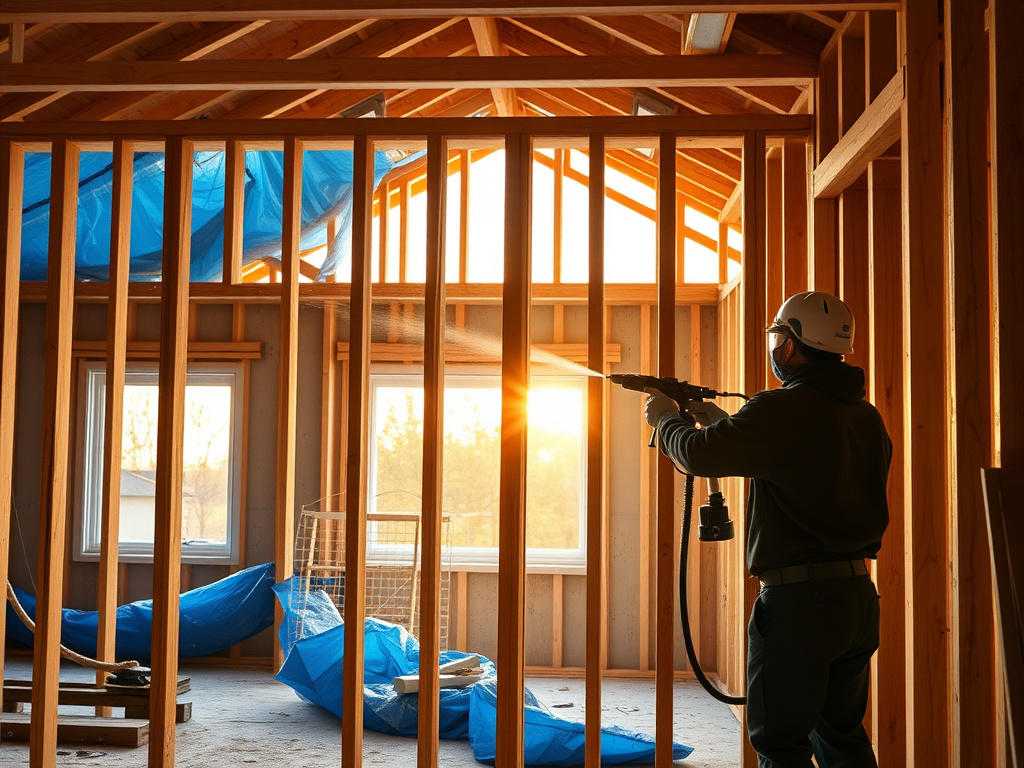
Spraying open framing before drywall goes up is a very different job than adding foam to a house that is already built and finished.
Two Very Different Starting Points
Spray foam performs the same job — sealing air leaks and insulating cavities — whether it goes into a brand-new house under construction or an existing home that has been standing for decades. But the starting conditions are different enough that the two scenarios amount to different kinds of projects, with different access, different products, different costs, and different timing constraints.
New construction gives a spray foam crew full access to open framing before any finishes go up. Retrofit work in an existing, occupied home means insulating around drywall, siding, flooring, and finishes that are already in place, often without disturbing them. Understanding which category a project falls into shapes almost every other decision, from foam type to budget to scheduling.
New Construction: Open Access, Full Cavities
In new construction, spray foam is typically applied after framing is complete and before insulation inspection and drywall — a specific window in the build schedule sometimes called the "foam stage." With studs, rafters, and floor joists fully exposed, installers can spray directly into every wall cavity, roofline bay, and floor assembly from one side, achieving a full, even application without having to work around finished surfaces.
This open access also makes it easier to fully surround electrical boxes, plumbing runs, and structural connections, since the installer can see exactly what is in each cavity before spraying. It is generally the most efficient and highest-quality way to install spray foam, simply because nothing is in the way.
Retrofit: Working Around What Is Already There
In an existing home, most of the house is already closed up — drywall is finished and painted, siding is on the exterior, and flooring covers the joists. Retrofitting spray foam into finished wall cavities generally means injection foam, pumped through small holes drilled from the exterior siding or interior drywall into each stud bay, with the holes patched afterward. This gets foam into a closed cavity without demolition, but it is a different product and process than direct spray application, and it is usually not inspected visually the way a new-construction spray job can be.
Retrofit work is often most successful in the areas of a house that remain naturally accessible even after the home is finished: attics (from the attic floor or roofline), crawlspaces, basements, and rim joists. These areas do not require drilling into finished walls, so they can receive full direct-spray foam even in an older home, which is one reason attic and crawlspace projects are the most common entry point for spray foam retrofits.
Cost Differences Between the Two Paths
New-construction spray foam is generally more cost-efficient per square foot treated, since the open access means faster, more direct application with less setup and no need to protect or work around finished surfaces. Builders often bundle it into the overall insulation package for the home, and it competes directly against batt or blown insulation as one line item in the build budget.
Retrofit costs vary more depending on the scope. Attic and crawlspace retrofits, which use direct spray access, are often priced similarly to comparable new-construction work in those same areas. Wall injection retrofits tend to cost more per square foot of wall area than new-construction wall spraying, since the process is slower, requires drilling and patching, and the foam itself is a different, often pricier specialty product. A whole-house retrofit that includes wall injection is typically a bigger investment than the equivalent square footage would have been if installed during construction.
Timing Considerations
New-construction spray foam has to happen within a specific, fairly narrow window in the build schedule — after rough electrical, plumbing, and HVAC are roughed in, but before insulation inspection and drywall. Missing that window means either delaying the schedule or losing the opportunity to spray open cavities, so coordination with the builder and other trades matters a lot. Weather and temperature can also affect scheduling, since spray foam application has minimum substrate and ambient temperature requirements.
Retrofit projects are not tied to a construction schedule and can generally be scheduled whenever it works for the homeowner, which is one practical advantage. That said, attic and crawlspace work is still easier and more pleasant to schedule outside of extreme heat, and wall injection projects benefit from being planned around other exterior work like siding replacement or repainting, since drilled access holes are usually patched to blend with the existing finish.
Inspection and Quality Control Differences
New-construction spray foam is unusually easy to inspect before it disappears behind drywall. Building inspectors, energy raters, and homeowners themselves can walk through the open framing and visually confirm thickness, look for missed spots or gaps around penetrations, and check that any required ignition or thermal barrier is planned correctly, all before the walls are closed up. Many jurisdictions require this kind of insulation inspection as a standard step in the permitting process, which adds a layer of accountability that is hard to replicate later.
Retrofit work, especially wall injection through drilled holes, does not offer the same visual confirmation. Once foam is injected into a closed cavity, there is no practical way to see how completely it filled the space or whether it reached every corner around wiring and blocking. Reputable retrofit contractors compensate with technique — injection patterns designed to fill cavities systematically, and sometimes infrared or other diagnostic tools to check for cold spots after the fact — but the inherent lack of direct visual inspection is a real difference between the two approaches, and one worth understanding going in.
What to Plan for in New Construction
Homeowners or builders planning spray foam for new construction should decide on foam type (open-cell, closed-cell, or a combination) and R-value targets early in the design process, since wall and roof assembly details, vapor control strategy, and even HVAC sizing can be affected by that choice. It is worth confirming with the insulation contractor which trades need to be complete before the foam crew arrives, and building buffer time into the schedule in case of weather delays.
It is also worth asking how the foam contractor coordinates with the framing and electrical crews to avoid gaps around penetrations, since a fully open cavity does not automatically guarantee a perfect application if the crew is rushed.
What to Plan for in Retrofit
Homeowners planning a retrofit should start by identifying which areas of the house can get direct-spray access (attic, crawlspace, basement, rim joist) versus which would require injection foam through finished walls, since these have different costs, different foam products, and different expected performance. A contractor should walk the house and explain, area by area, which approach applies and why.
For wall injection specifically, it is worth asking how patch holes will be finished to match existing siding or interior drywall, and getting a clear before-and-after expectation set. Retrofit projects are also a good opportunity to combine spray foam with other envelope improvements — like addressing an underinsulated attic floor or rim joist — since a contractor is often already on-site assessing the whole building.
It is also worth setting realistic expectations about how much a retrofit can accomplish compared to starting from scratch. A well-executed retrofit meaningfully improves comfort and energy performance, but it is working within the constraints of an existing structure, so results in wall cavities reached only through injection may not fully match what the same walls would have achieved if sprayed openly during construction. Framing that difference honestly upfront helps avoid disappointment once the work is done.
Frequently Asked Questions
Generally yes, per square foot, because open framing access allows faster, more direct application. Retrofit wall work using injection foam tends to cost more than equivalent new-construction wall spraying because of the drilling, patching, and specialty product involved.
Yes. Areas like attics, crawlspaces, and basements can often receive direct-spray foam even in an existing home since they remain accessible. Finished walls typically require injection foam through drilled access holes instead.
Injection foam is a specialty product pumped through small holes drilled into a closed wall cavity, designed to expand more slowly and at lower pressure than open-cavity spray foam so it does not bow out drywall or siding. It is used specifically for retrofitting finished walls.
Typically after rough electrical, plumbing, and HVAC are complete but before drywall and insulation inspection — a specific window often called the foam stage, coordinated closely with the builder's schedule.
In directly accessible areas like attics and crawlspaces, retrofit foam performs similarly to new-construction foam. Injection foam in finished walls is a different product with different performance characteristics and is generally not evaluated the same way as a direct-spray application.
More Guides
Spray Foam Insulation Cost Guide
Realistic 2026 price ranges for open-cell and closed-cell spray foam, what drives cost up or down, and how to spot a lowball quote.
Read the guideAttic, Crawlspace & Wall Applications
How spray foam application changes by area of the house — attic roofline vs. floor, open-cavity vs. injection walls, and crawlspace encapsulation.
Read the guideChoosing a Spray Foam Contractor
What to check before hiring — certification, quality control, warranty terms, and the red flags that separate a solid contractor from a risky one.
Read the guideReady to see what spray foam costs for your project?
Tell us about your space and get connected with a vetted local installer for a free, no-obligation quote.