5 Signs Your Attic Needs Better Insulation This Year
Most homeowners never go into the attic unless something forces them up there — a leak, a holiday-decoration hunt, or a home inspection. That is part of why attic insulation problems tend to go unnoticed for years. The signs are there, but they usually show up somewhere else in the house first: a cold bedroom, an icy roof edge, a bill that keeps climbing. Here are five of the clearest indicators that your attic insulation is not doing its job anymore.
1. Ice Dams Forming on the Roof Edge
If you notice thick ridges of ice building up along your roof's lower edge in winter, especially paired with icicles hanging off the gutters, that is one of the most reliable visual signs of an underinsulated or poorly air-sealed attic. Ice dams form when heat escaping from the living space below warms the underside of the roof deck unevenly, melting snow higher up on the roof while the eaves stay cold. That meltwater runs down and refreezes at the colder edge, building up a dam that can force water back up under the shingles.
The root cause is almost always heat loss into the attic from below — through gaps around light fixtures, attic hatches, plumbing stacks, or simply insulation that is too thin or has settled over time. A well-insulated, well-air-sealed attic keeps the roof deck close to outdoor temperature, so snow melts evenly (or not at all) rather than in the uneven pattern that creates dams. If ice dams are a recurring problem at your house, it is worth having the attic looked at before another winter passes, since repeated ice damming can lead to real water damage to the roof deck, insulation, and ceilings below.
2. Uneven Temperatures Between Floors
A second-floor bedroom that runs noticeably hotter in summer and colder in winter than the rest of the house is a classic symptom of attic insulation problems. Heat rises, and in summer a hot, poorly insulated attic radiates that heat downward into the rooms directly beneath it. In winter, the same gaps and thin spots let conditioned air escape upward and out, leaving upstairs rooms harder to keep warm no matter how the thermostat is set.
This unevenness is often mistaken for an HVAC sizing or ductwork problem, and sometimes ductwork is a contributing factor. But before assuming the system itself is undersized, it is worth ruling out the attic. A house where the attic floor or roofline has adequate, properly installed insulation and good air sealing tends to hold much more consistent temperatures floor to floor, because the attic stops acting like an uncontrolled thermal buffer sitting directly above the living space.
3. High Heating and Cooling Bills Relative to Home Size
Every home's energy use depends on climate, house size, window count, and system efficiency, so bills alone are not proof of an insulation problem. But if your bills feel consistently high compared to similarly sized homes in your area, or if they have crept upward over the years without any obvious change in usage habits, attic insulation is one of the first places worth investigating.
The attic is typically the single largest surface area separating conditioned living space from the outdoors, which makes it one of the highest-leverage places to fix heat loss and heat gain. Insulation that has settled, compressed, or has gaps around penetrations lets your HVAC system work harder for longer to hold the same setpoint, and that shows up directly on the bill month after month. A home energy assessment, which many utility companies offer at low or no cost, can help quantify how much of your bill is attic-related versus coming from other sources like windows or air leaks elsewhere in the house.
4. Visible Daylight or Drafts in the Attic
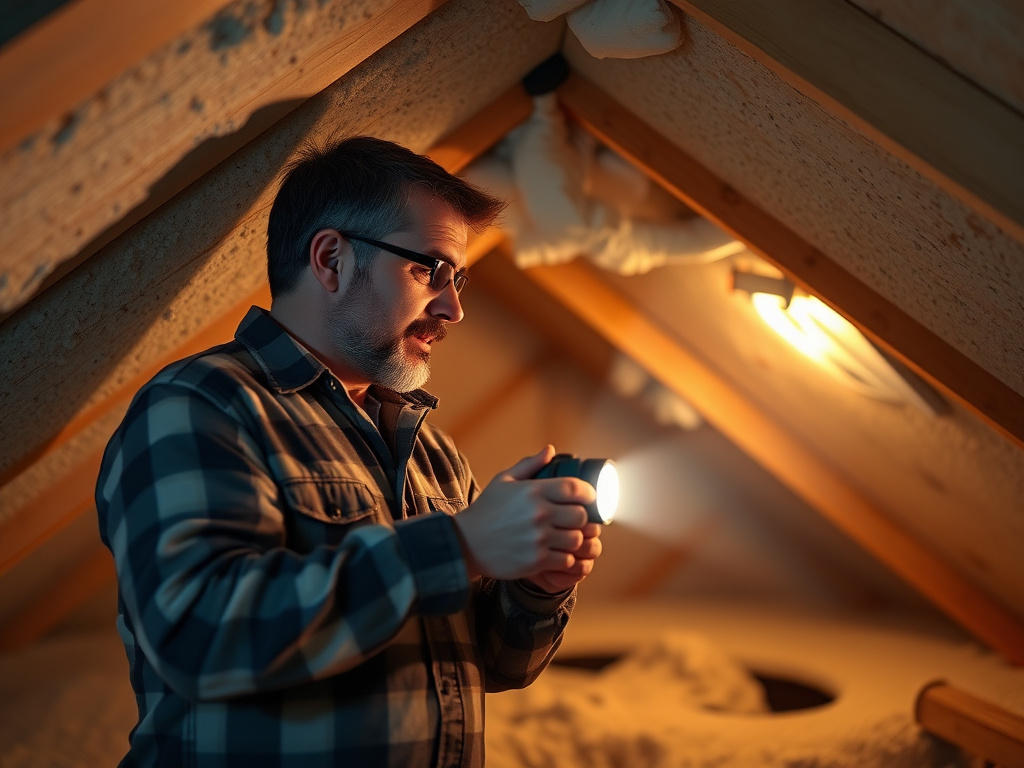
This one is straightforward: go up into the attic on a bright day, turn off any lights, and look around the perimeter and roofline for points of visible daylight. Gaps around soffits, vents, plumbing stacks, electrical penetrations, or the edge where roof meets wall are common spots where daylight — and air — gets through. If you can see light coming in, you can be confident air is moving through that same gap in both directions, carrying conditioned air out and outdoor air in.
Even without visible daylight, drafts can often be felt by hand along the attic floor perimeter or around any framing penetrations, particularly on a windy day. These air leaks are frequently more impactful on comfort and energy loss than the insulation's R-value alone, because moving air bypasses insulation's ability to slow heat transfer. This is part of why spray foam is often chosen for attic applications: it insulates and air-seals in a single application, rather than requiring insulation and separate air sealing as two distinct steps.
5. Pest or Rodent Activity in the Attic Insulation
Signs of rodents or other pests in attic insulation — droppings, chewed or displaced material, nesting debris, or a persistent odor — are not just a pest-control issue. Loose-fill and batt insulation are easy for rodents to burrow through, displace, and nest in, which compresses the material and destroys its ability to trap air effectively in the disturbed areas. Even after a pest problem is resolved, the insulation underneath is often permanently compromised in those spots.
If you have had pest activity in the attic, it is worth having the insulation inspected, not just replaced blindly, since contaminated material sometimes needs full removal before anything new goes in. This is also a point where many homeowners consider switching insulation types entirely: spray foam cures into a solid, adhered layer that does not offer the same nesting opportunity that loose-fill material does, which is one reason it is often discussed alongside pest-prevention conversations even though it is not marketed as a pest-control product on its own.
What to Do If You Recognize These Signs
None of these five signs on their own proves you need a full attic insulation overhaul, but if two or more sound familiar, it is a strong signal that the attic deserves a closer look. A qualified insulation contractor can assess current R-value, identify air-leak points, and give you options ranging from a straightforward top-up to a more comprehensive re-insulation and air-sealing project. Catching these signs early tends to be far less costly than waiting for ice-dam roof damage or a full winter of high bills to force the issue.
More From the Blog
How Much Does Spray Foam Insulation Really Cost in 2026?
Spray foam pricing varies wildly from quote to quote. Here is a full breakdown of what you should actually expect to pay in 2026, and why two bids for the same house can differ by thousands.
Does Spray Foam Insulation Increase Home Resale Value?
Energy efficiency upgrades increasingly influence how buyers evaluate a home. Here is how spray foam specifically factors into resale value, inspections, and appraisals.
Ready to see what spray foam costs for your project?
Tell us about your space and get connected with a vetted local installer for a free, no-obligation quote.